© Snøhetta Architects

HEC

facade

Contracting authority : HEC (client) et JLL (project management assistance)
Architects : Snøhetta / NeM Niney et Marca Architectes / Pierre-Antoine Gatier Agency
Surface area : 41 400 m² de GFA
Phases : Studies : 2025 / Construction : 2026 – 2031

The HEC Campus project, led by the Sogelym Dixence–Linkcity consortium in partnership with Bouygues Bâtiment Île-de-France, won an international competition in June 2025. It is a design–build operation currently in the Detailed Design Phase (APD), following the submission of the building permit

The new campus is organized around 10 buildings and four canopies spread across two sites :

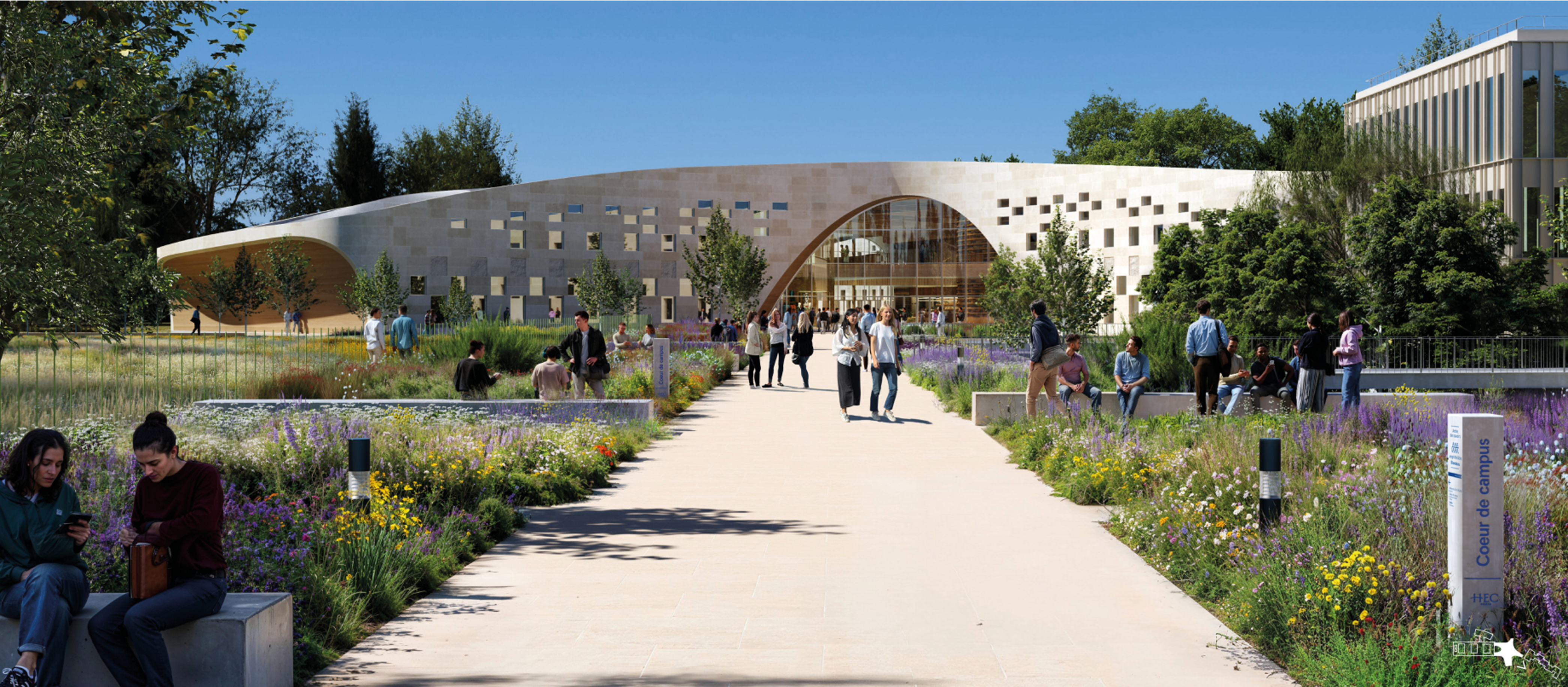
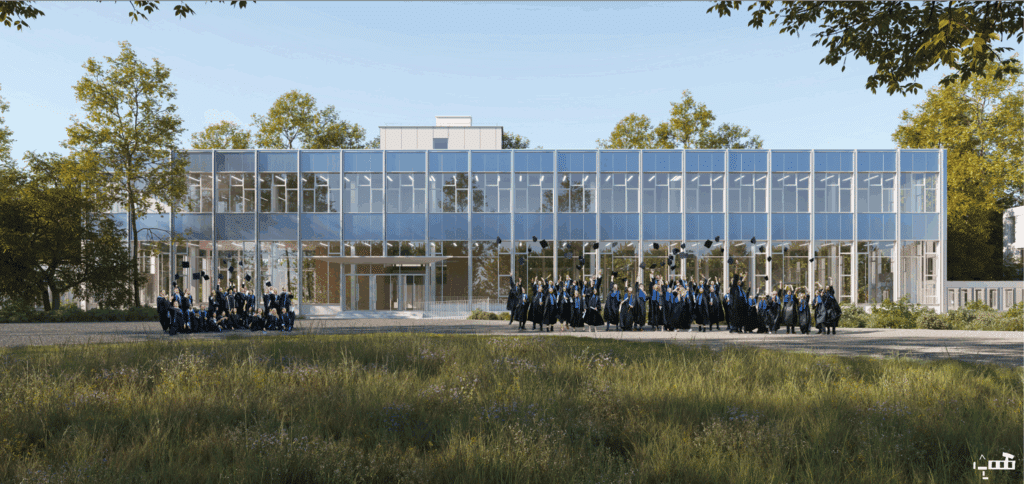
  • Upper Campus (Haut-Campus): This area includes the historic buildings S, T–T5, U, V, W1 and W2, an entrance pavilion, as well as a new landmark building: the Campus Heart (CDC) designed by Snøhetta.
  • Lower Campus (Bas Campus): This section includes the renovation of the “Petits Communs,” the construction of the “Grand Commun,” the refurbishment of the “Nordling” building by NEM Architectes, and the restoration of the “Château” by the Pierre-Antoine Gatier agency.
Expertise employed

An ambitious and sustainable architectural project

The Campus Heart (CDC) stands out with an innovative façade combining energy performance and architectural elegance. Built using solid stone, it offers durability, thermal inertia, and a low environmental impact. The design optimizes natural daylight and solar control while giving the university a strong architectural identity. This project pushes the limits of self-supporting stone construction solutions, with its complex geometry and large façade panels  representing a true technical and craftsmanship challenge.

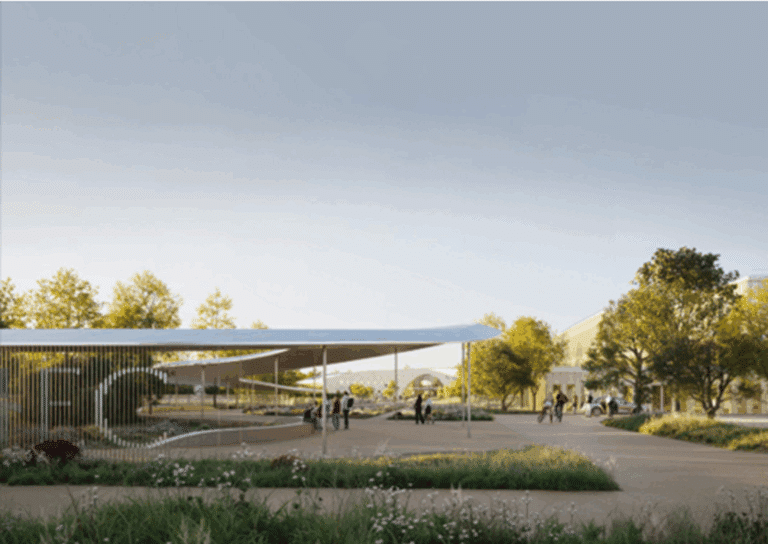
At the main entrance of the site, the Entrance Pavilion, featuring a double serpentine canopy, presents its own structural and construction challenges to preserve its intended elegance and lightness. Designed in polished stainless steel, the rationalization of its complex geometry is one of the key aspects of the study.

Heritage enhancement and environmental innovation

The existing buildings, designed in the 1960s by René André Coulon, reflect architecture that is deeply integrated into an exceptional natural landscape. The project aims to preserve and enhance this remarkable heritage by replacing the façades in respect of the original aesthetics, while improving thermal performance and user comfort. The use of bio-based and low-carbon materials is prioritized.

New construction systems are introduced to support these goals, such as replacing curtain walls with timber-frame façades where the opaque-to-glazed ratio is high.

© Snøhetta Architects

A dialogue between history and modernity

The redevelopment of the Lower Campus follows an exemplary environmental approach, making use of the existing structures’ thermal inertia and the natural environment to optimize comfort and ventilation.

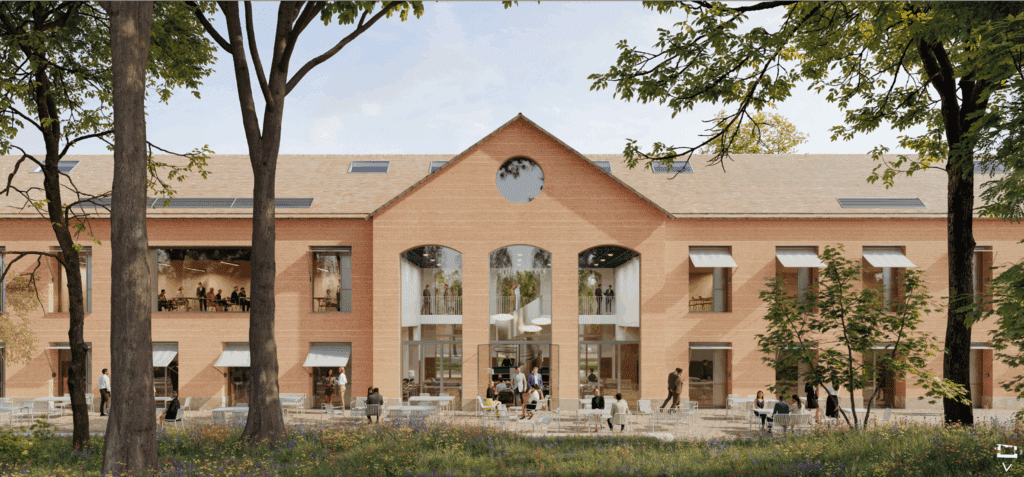
The emblematic Grand Commun building, rebuilt using rammed earth, creates a strong link to heritage while expressing a contemporary architectural language. The façade design helps manage thermal comfort in both summer and winter, while respecting the original architectural intent. Thermal insulation and airtightness are improved, complemented by solar shading devices and passive systems.

The Nordling building undergoes a complete façade renovation, integrating a maximum share of bio-based construction materials to reduce its environmental impact. Timber-framed window assemblies are chosen to combine performance, comfort, and low carbon impact. This system enables the integration of insulated double glazing and opaque insulated timber components, while remaining compatible with the construction constraints imposed by the existing concrete overhang.

Building U – Honor hall © Snøhetta Architects

‘Grands communs’ Building © NeM Architects

Find out more with...

Thomas SCHWINDENHAMMER

façades.

Chloé GIRARDON

responsable adjointe pôle structures.

Alkistis KROUSTI

façades.

Laya HERMELIN

façades.

Sonia ZERHOUNI

façades.

Romain COLLELA

structures.

Angèle MARIETTE

structures.

Vincent Würtz

environnements.

Philosophy

Responding to the climate emergency by sustainably transforming urban fabric.

Elioth is a brand of the Egis group.

Egis Concept (Elioth + Openergy) is a collective that brings together all the facets of technical design to meet environmental challenges.

©2001-2024 Elioth – design by  betrue.fr
Legal Noticeprivacy policy