Contracting authority : Icade, Semapa, Université de Chicago Architects : Studio Gang, Parc Architectes Surface area : University : 2 400 m² GFA – Housing/Retail : 7 150 m² GFA Phases : Studies : 2019-2021 / Construction : 2021-2025 / Delivery : 2025
Located above the RER C railway tracks and the Bibliothèque François-Mitterrand station, plot M9A lies at the heart of a rapidly developing Parisian district. SEMAPA aims to deliver an exemplary project here, one that is firmly rooted in its urban context while responding to the needs of contemporary Paris.
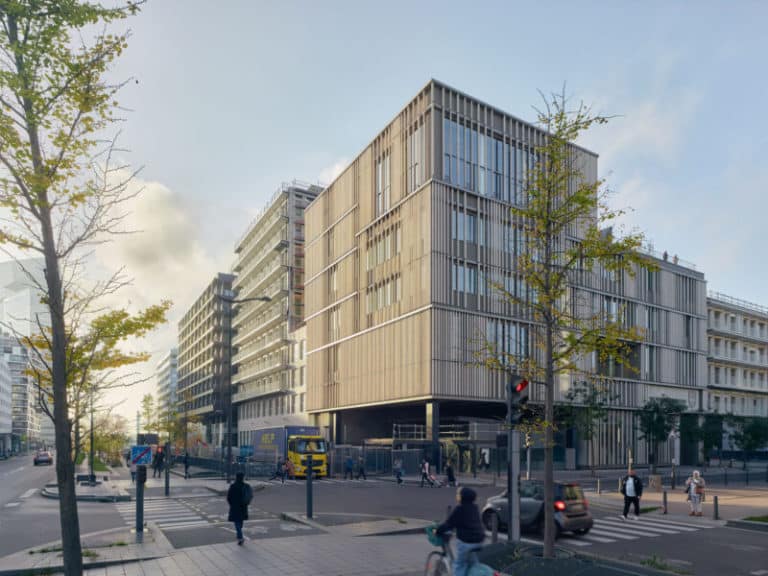
The design team proposes a project organized around a landscaped central courtyard, with three residential buildings rising up to nine storeys (R+9), along with a building housing the Paris Center of the University of Chicago.
The project addresses several key challenges :
Building on an existing slab above railway infrastructure,
Achieving a high level of low-carbon performance,
Responding to a complex urban and technical context,
Asserting a strong architectural and landscape ambition, consistent with the identity of the city.
Technical context – SNCF slab and structural constraints
The existing slab structure, originally built by Eiffage TP, forms the roof covering of the underground station and serves as the support for the future development.
The positioning of the buildings is strictly governed by the location of the bearing points on this slab, whose load-bearing capacity and allowable weight are limited.
A global structural model was developed, incorporating both the proposed buildings and the supporting slab, in order to accurately analyse :
the load transfer from the buildings onto the slab,
the load transfer from the slabs and superstructures to the existing pot bearings
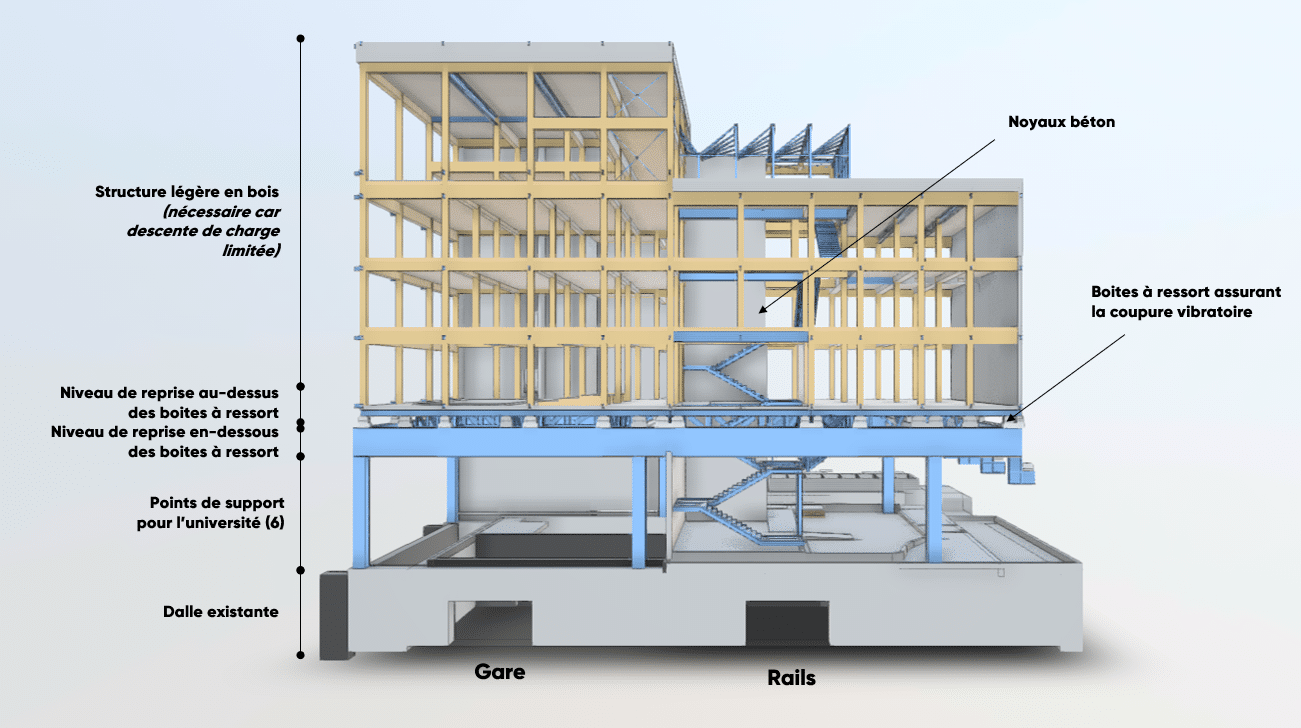
In addition, the presence of railway infrastructure requires vibration isolation between the superstructure and its support. This is achieved through the installation of spring boxes positioned beneath columns and load-bearing walls between the ground-floor (PH RDC) and the first floor (PB R+1), thereby isolating the buildings from vibration and acoustic disturbances.
Finally, certain areas must remain completely free of structural elements, in particular those reserved for the passage of the station’s smoke extraction shafts, located close to the project’s concrete cores.
Technical and construction response
In response to these constraints, the project develops an adapted structural and construction strategy based on several key principles :
Lightweight design, to limit the loads transferred to the existing slab;
Maximising the appropriate use of timber in both structure and façades to achieve a low-carbon building, despite the constraints;
Controlled load transfer, ensuring optimal compatibility between the superstructure and the existing slab;
Long spans on the first floor, in order to create clear spans between the authorised bearing points and preserve the required technical zones;
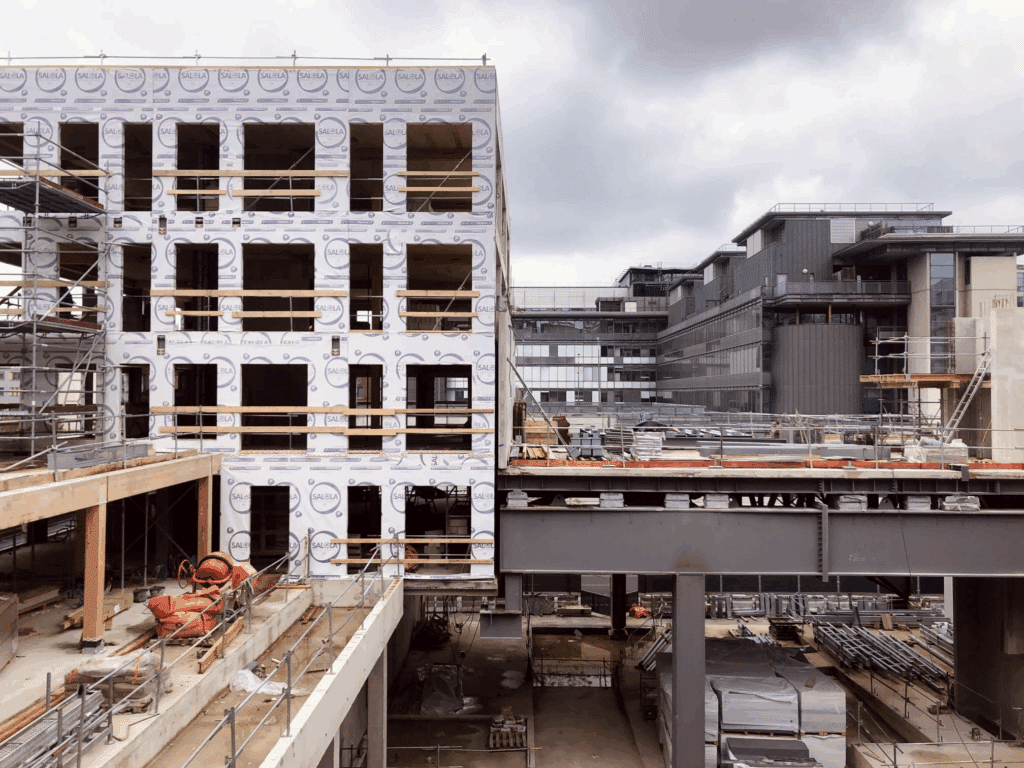
Material hybridity, combining steel, concrete and timber according to their respective properties to optimise weight, efficiency and environmental performance.
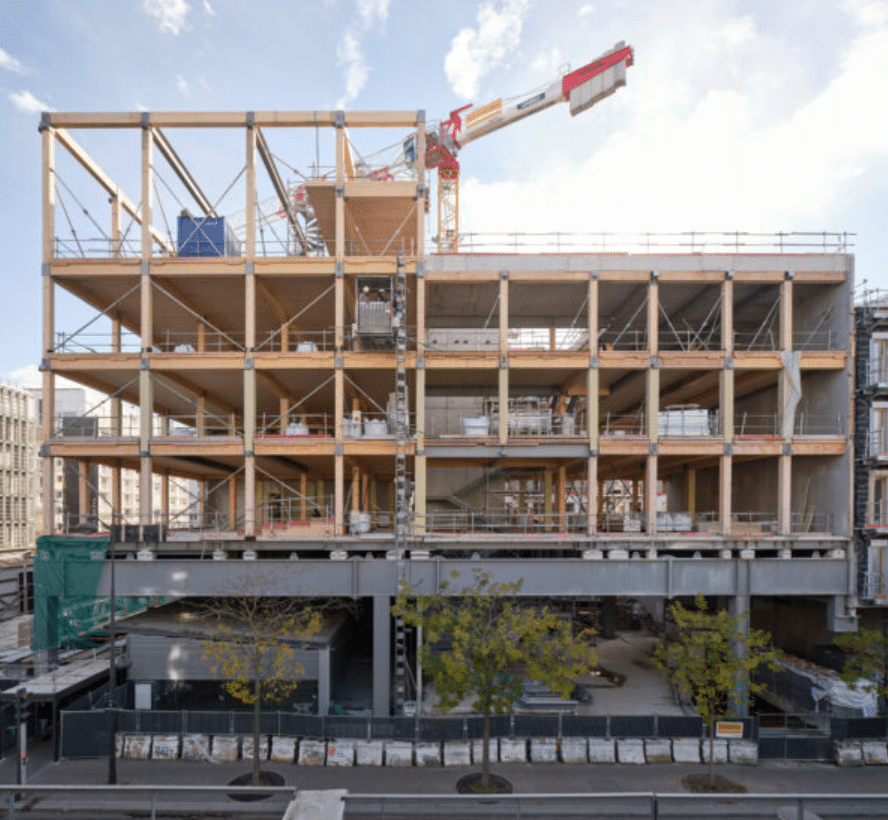
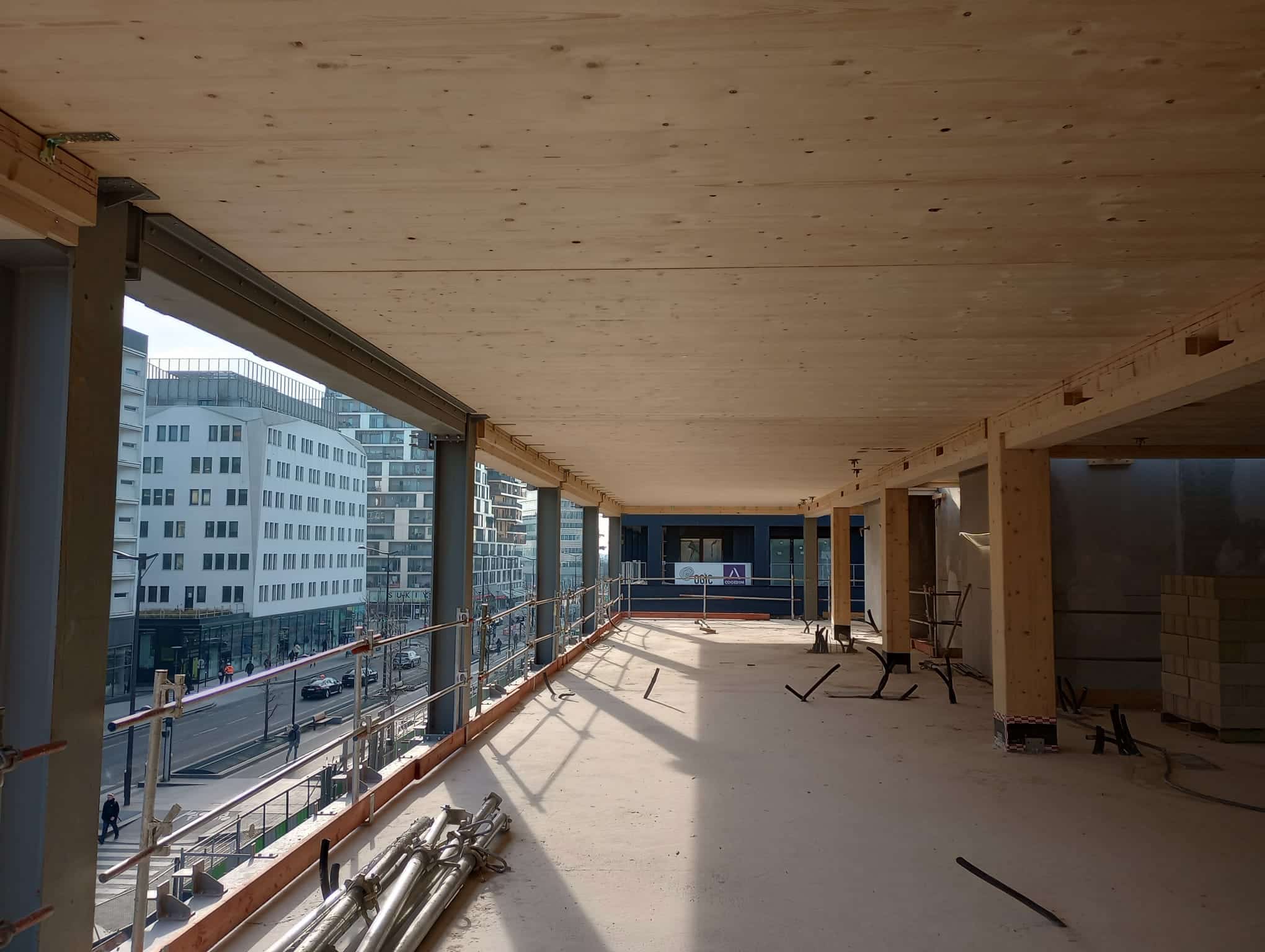
The transfer level above the slab is constructed in concrete for the residential buildings. For the University of Chicago building, only six bearing points are permitted on the slab: a steel transfer structure, consisting of beams spanning more than 16 metres, enables these distances to be bridged and supports the superstructure.
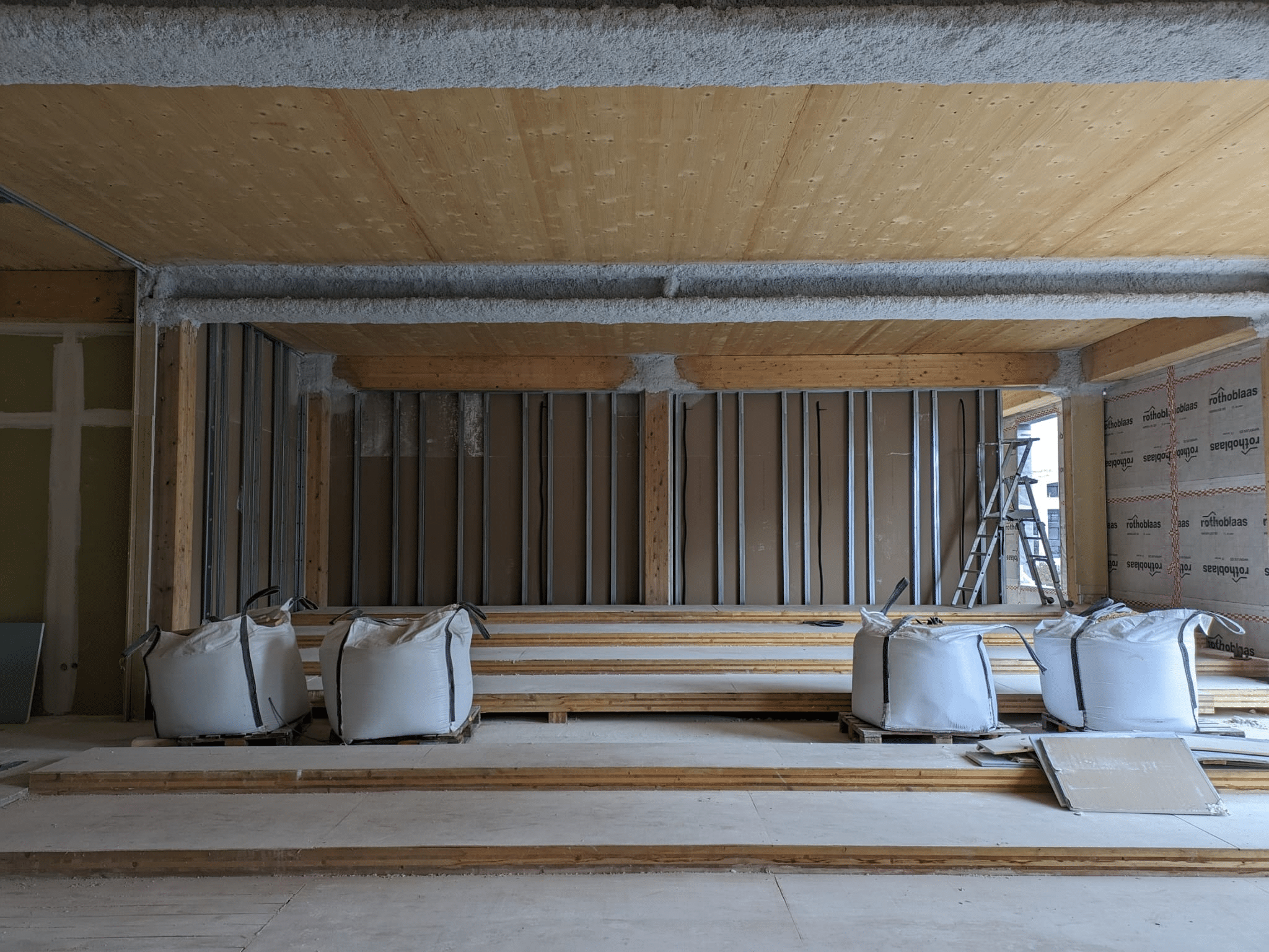
To ensure a structure that is both lightweight and low-carbon, the superstructure is primarily built in timber. A glued laminated timber frame (columns and beams) supports CLT floor slabs, which act as diaphragms and transfer horizontal forces to the concrete cores. These cores then transfer the loads to the spring boxes, and subsequently to the transfer structures, the existing slab and the pot bearings.
Facades engineering
The project’s facade is designed to be particularly low-carbon. It consists of timber-framed panels clad with pre-greyed timber. On the courtyard side, the layout of the timber-framed panels is conventional, whereas on the street-facing elevations, horizontal bands accommodate continuous aluminium joinery.
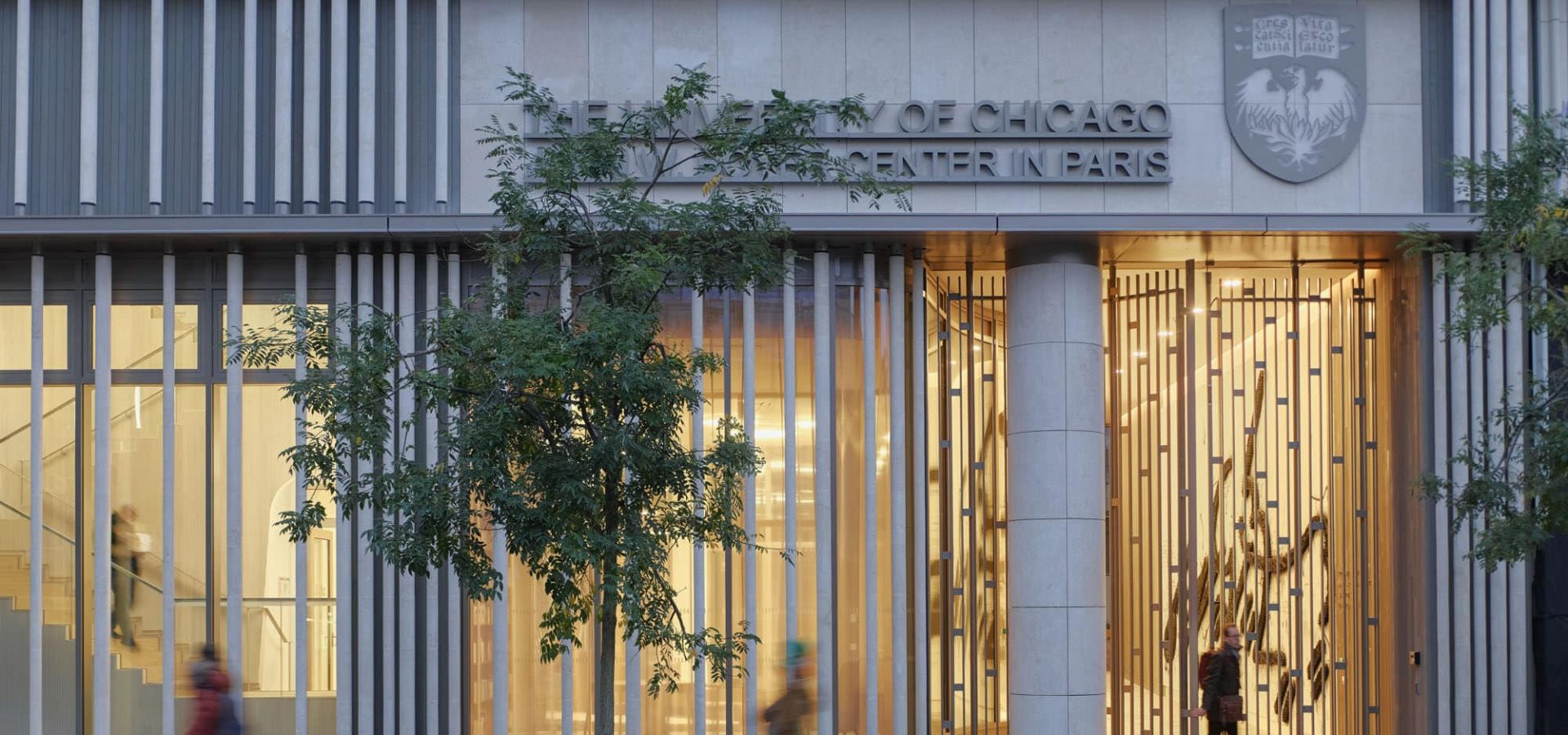
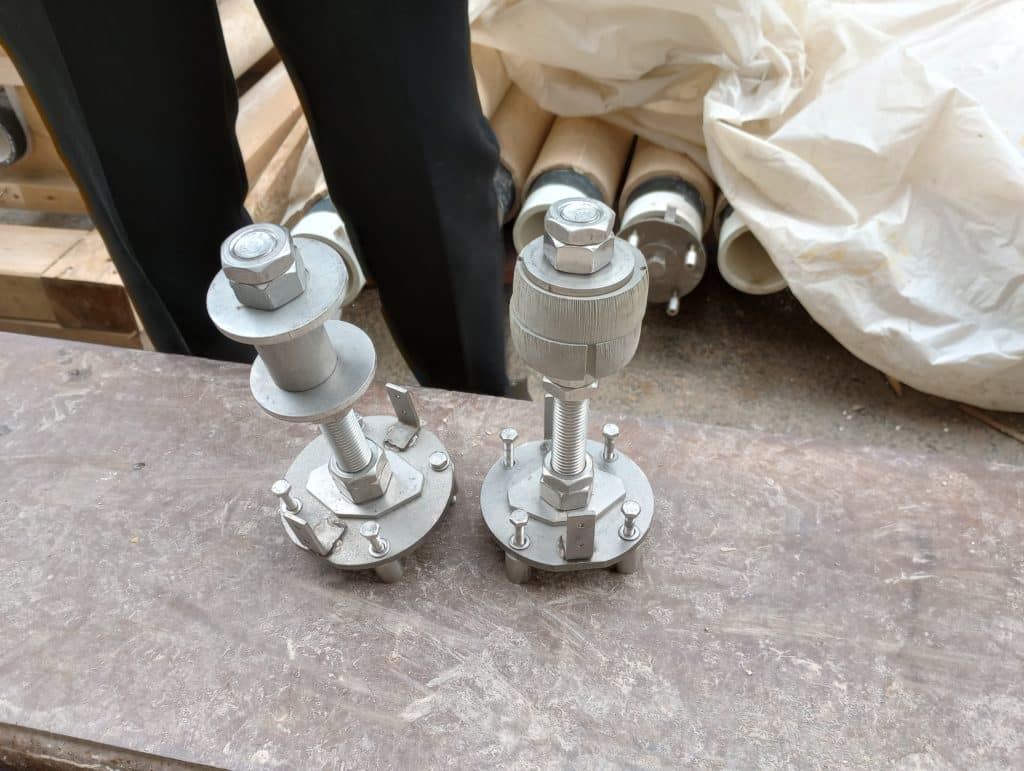
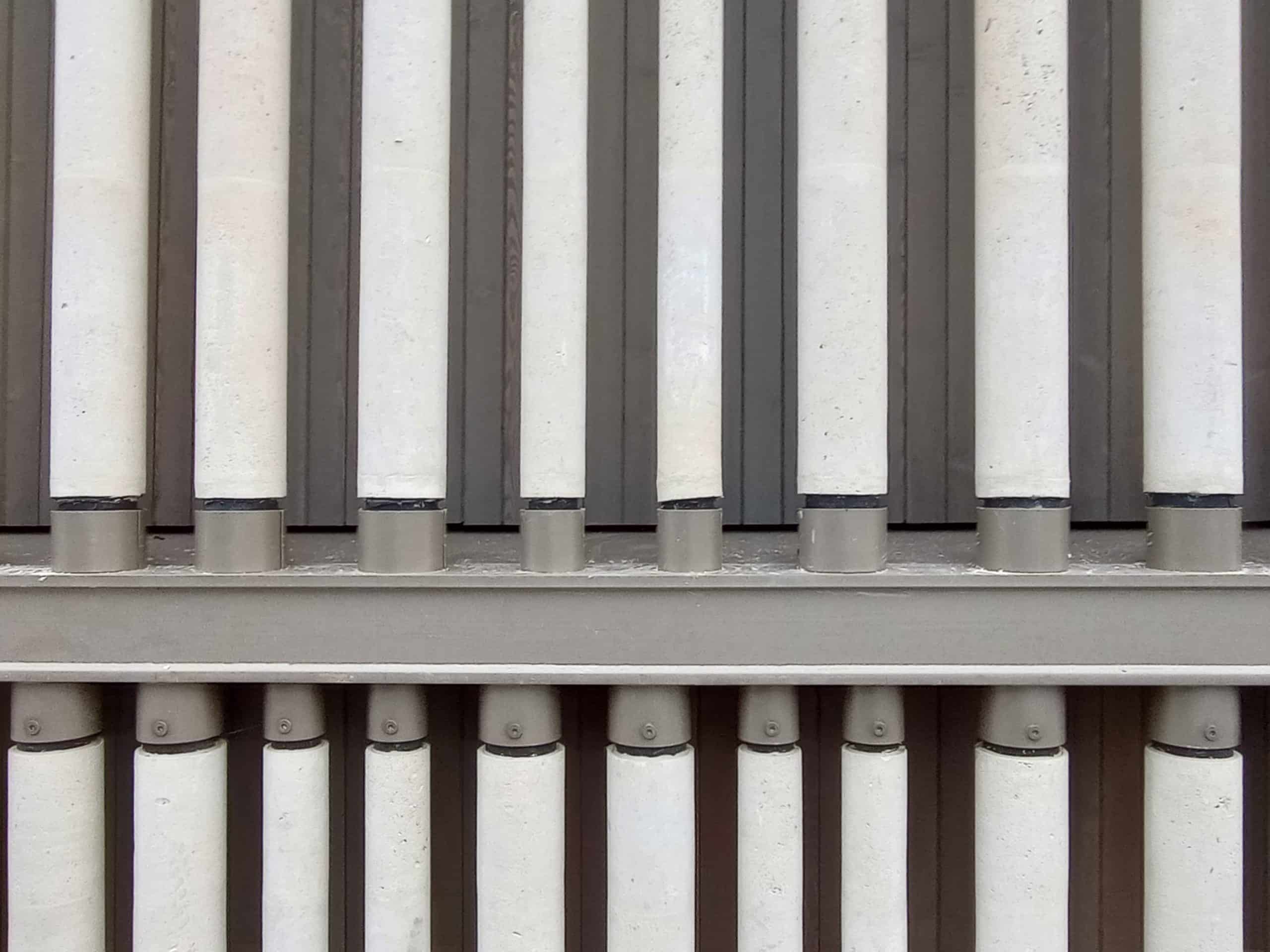
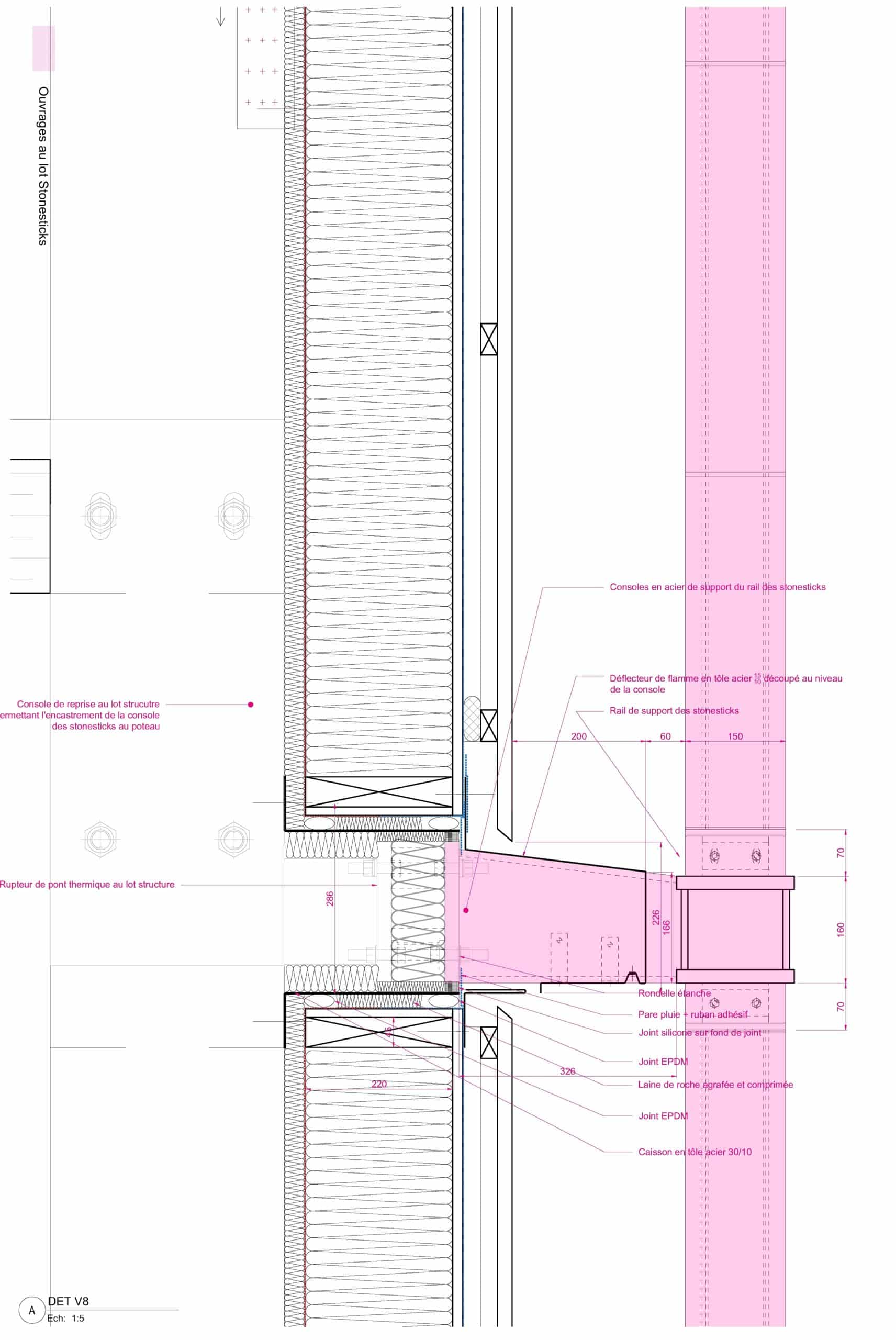
An additional complexity arises on the street-facing side: the timber-framed panels include openings at each timber column to allow the passage of galvanized steel brackets. These brackets support a secondary frame used to suspend a network of stone sun-shading elements, known as “stonesticks”.
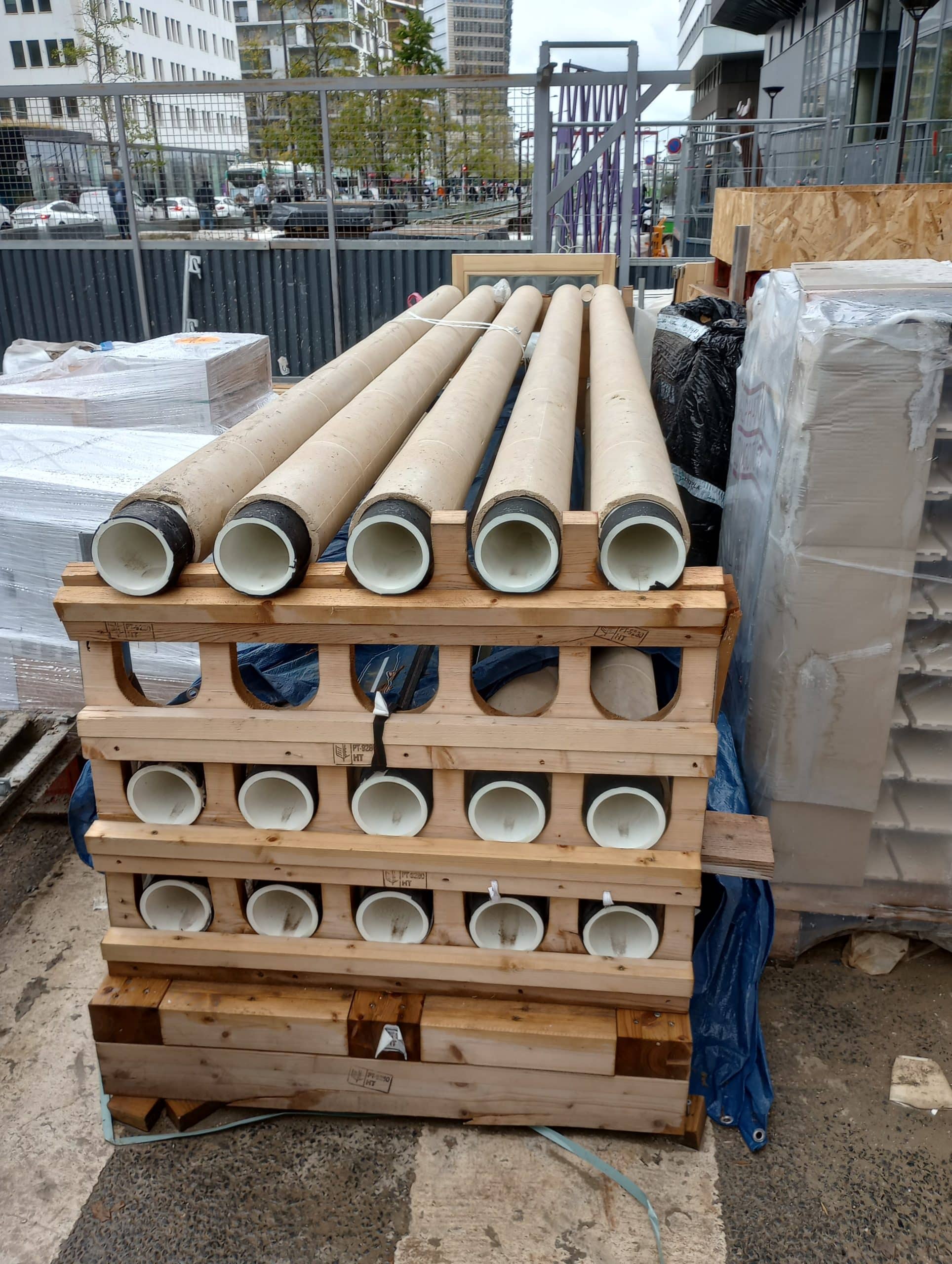
Each stonestick is made of a pultruded composite tube (fiberglass and carbon fiber), onto which machined Saint-Maximin stone half-shells are bonded. Two diameters (15 cm and 11 cm) and heights ranging from 2 m to 8 m are used throughout the project. The tallest stonesticks include an intermediate support to resist wind loads.
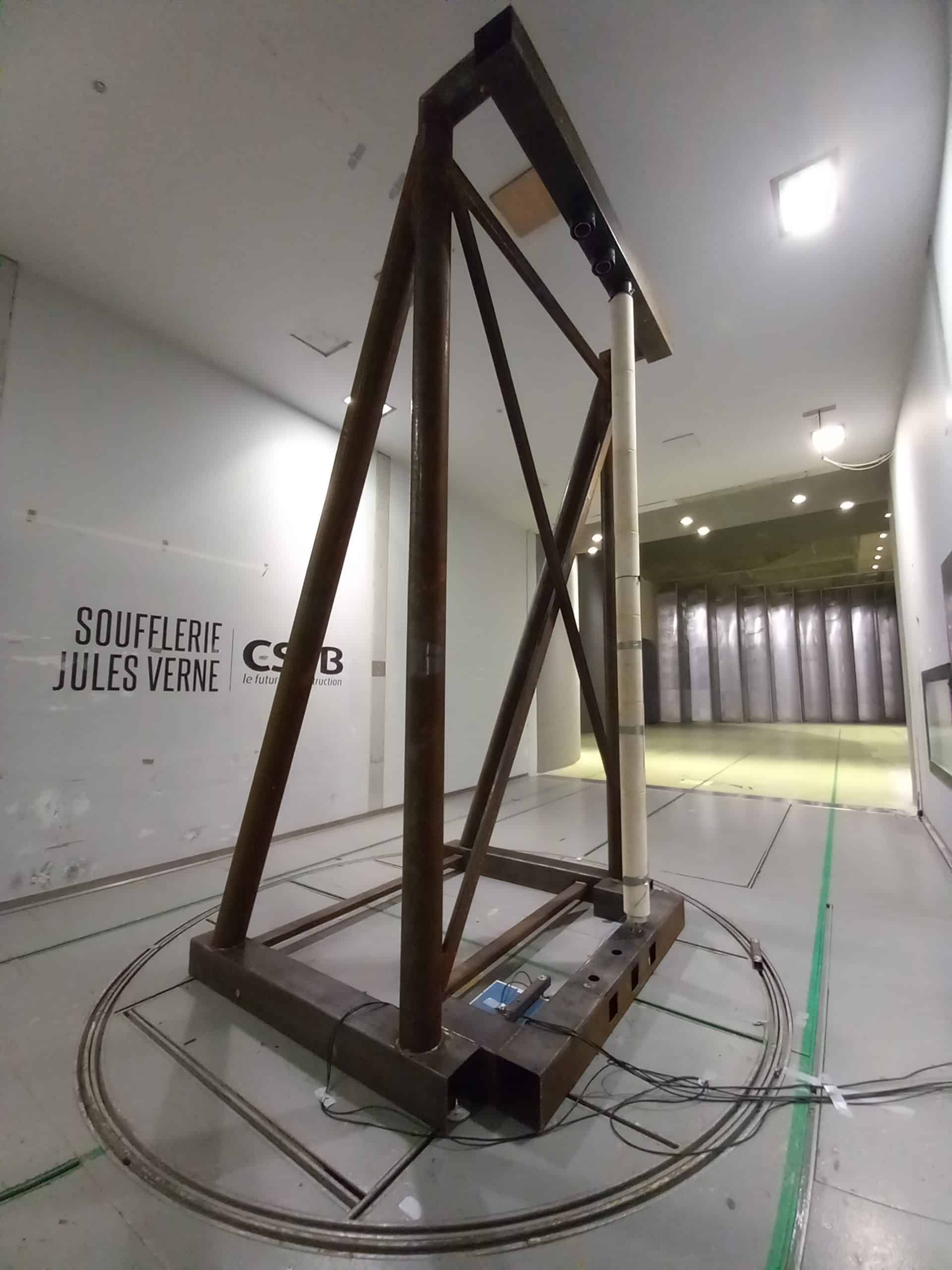
These elements were subject to an Experimental Technical Assessment (ATEx) and underwent wind tunnel testing, notably to evaluate the risk of vortex-induced detachment.
Environmental studies
Integration of all project components to design low-carbon structures, including specifications for constructive solutions and the use of bio-based or geo-sourced materials
Summer comfort studies (DTS + CFD)
Analysis of visual comfort and daylight access (FLJ)
Studies conducted in accordance with French and American certification standards